The US soccer system has grown consistently over the last few years with new leagues and clubs being added constantly. The growth has been led by two of the major lower-level organizations as they show their intentions to grow the game at the lowest levels of US soccer. Both of these announced expansions would provide opportunities for local clubs to compete and possibly rise to a higher level.
NPSL-RL
The NPSL actually announced the NPSL-RL back in 2026, but it has yet to take shape and the NPSL conintues to look for interested clubs. The NPSL-RL is envisioned as a network of “regional leagues” (which is likely what RL stands for) that will be “organized regionally and operate nationally.” It is explicitly described as a “level beneath the current NPSL Tier 1,” suggesting that these competitions would act as a sort of second division to the NPSL leagues. Unlike the upper level, it will not be primarily a summer league; instead, the NPSL-RL leagues will feature both a Fall and Spring competition. The key idea of the RL leagues is to create a more accessible version of the NPSL with lower costs and lower operating standards.
What about promotion and relegation? The NPSL says its Tier 1 leagues and the RL leagues will create “a clear, connected pathway” and says the lower level will act as an “incubator for clubs aiming to grow into” the top league, but no direct mention of promotion and relegation. The NPSL-RL Director actually did an interview back in 2025 when the new lower level was first announced, and he deferred on saying if promotion/relegation would immediately be part of the new structure, and instead made it seem like it could be something to work towards in the future. Brown instead emphasized developing a "unified matrix" that would guide clubs from regional competition to the national tier, suggesting that advancement may initially depend more on organizational standards than league results.
The originally planned Spring 2026 launch does not appear to have taken place. The NPSL has not publicly announced a revised timeline, although a Fall 2026 start would be the next logical opportunity given the league's intended fall-spring calendar. The interview with Brown also hinted at unifying existing leagues. If that were the case, it would make sense that a real start was pushed past Spring 2026 to Fall 2026 to allow those league seasons to end.
UPSL Division 2
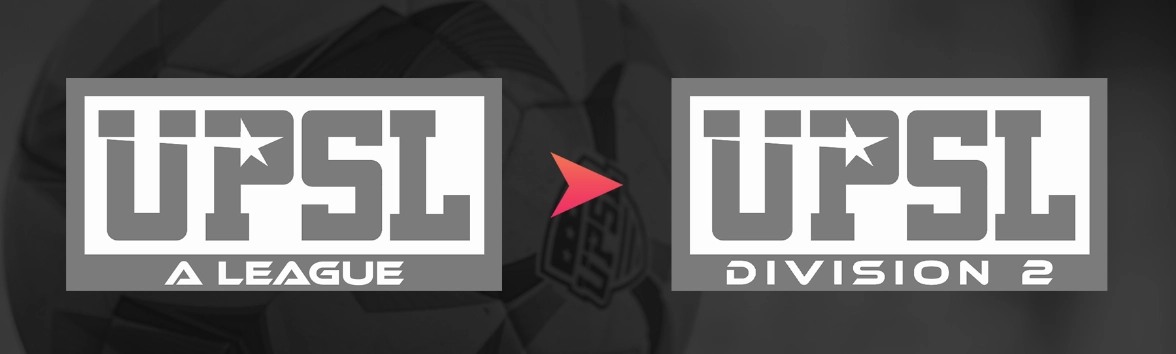
Admittedly, the UPSL rebranding of the “UPSL A League” as the “UPSL Division 2” is not really an expansion, but it does represent a commitment to building a more cohesive structure across the UPSL ecosystem to allow different levels of amateur US soccer to settle out. According to a press release, the change will take place starting in the Fall 2026 season in order to create “a clear, intuitive competitive structure” across the new, larger UPSL “pyramid.” The rebrand changes the thinking about how the third level fits with the first and second, but UPSL says that it doesn’t shift the objective of building a space for “younger players to get their first taste of adult soccer.”
For that reason, there will likely be a lot of “academies” and second teams of clubs that are higher up in the pyramid to start out, which doesn’t really lend itself to a promotion/relegation type flow between the levels. Indeed, UPSL does not explicitly say how this flow will happen. With that being said, as the UPSL grows and matures, it’s possible that we see clubs get filtered throughout the three levels that are not just academies or second teams. This would be an environment more in tune with an official promotion and relegation process.
Another bit of UPSL news that doesn’t necessarily represent an expansion in size but an expansion in legitimacy is the addition of another US Open Cup spot. Both the 2026 UPSL Champion and Runner-Up will received berths into the 2027 US Open Cup, instead of just the former. In the 2026 edition of the Cup, ten UPSL teams were represented.
What does this mean for the US soccer pyramid?
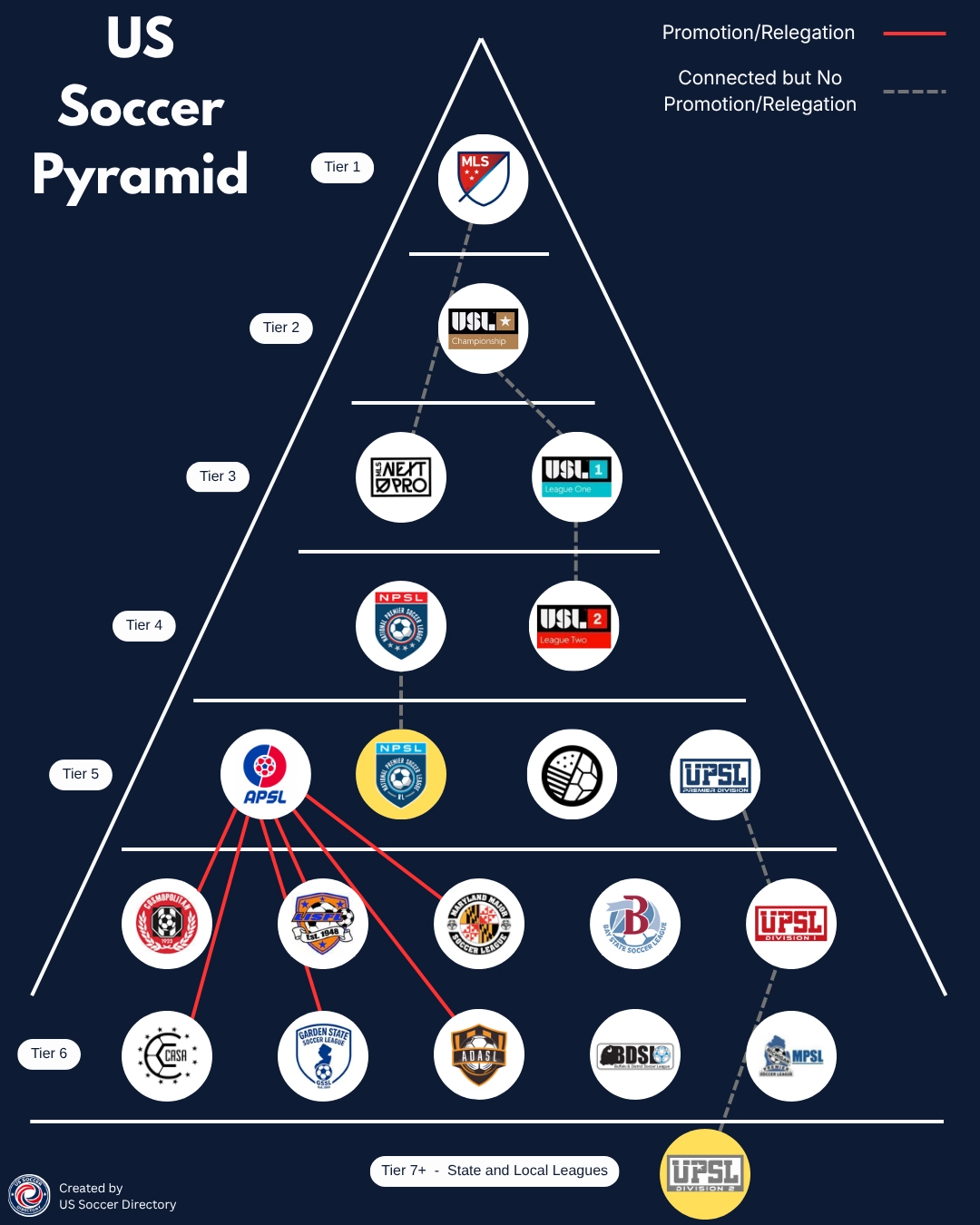
The introduction of the NPSL-RL and UPSL Division 2 could have two major impacts on the US soccer pyramid:
- A larger base of the pyramid. Both leagues would expand opportunities at the lower levels, creating a much larger Tier 5 and increasing competition with established state and local leagues such as the BSSL and Cosmo League. Over time, that could encourage (or force) some existing leagues or clubs to affiliate with the new NPSL and UPSL structures.
- A more connected pathway for clubs. Neither league has committed to promotion and relegation, but creating multiple tiers within the same organization makes movement between levels much more achievable than moving between separate leagues. Even if advancement is initially based on club standards rather than on-field results, these structures could lay the groundwork for promotion and relegation in the future.
Whether these new leagues launch immediately or take more time to develop, Fall 2026 should be another important step in the growth of the US soccer pyramid. With momentum from the FIFA World Cup and continued investment across the amateur game, the system appears poised to become larger, more connected, and more ambitious than ever.